
Academic Foundation & Pathway Programs
Your Future Begins with a Strong Foundation
University success begins long before students enter a chosen major. Our foundation and pathway programs connect subject knowledge, academic skills, and university readiness so students can move into higher education with confidence and direction.
Academic PreparationUniversity ReadinessFuture Success
Academic foundation3 streams
Preparation paths
University Readiness
Future Success
What are foundation & pathway programs?
Build the knowledge and learning habits behind university success.
The transition to higher education asks students to think independently, conduct research, analyze information, communicate effectively, and manage demanding work. These programs make those expectations teachable and achievable.
Academic knowledge
Develop the concepts, vocabulary, and subject foundations needed for future study.
Critical thinking
Evaluate evidence, question assumptions, compare perspectives, and form reasoned conclusions.
Research skills
Ask productive questions, locate sources, interpret information, and communicate findings.
Communication skills
Write, discuss, collaborate, and present ideas clearly in academic settings.
Learning strategies
Plan time, take notes, prepare for assessment, reflect, and study independently.
Academic confidence
Approach new challenges with realistic expectations, resilience, and a sense of capability.
University Pathway Program
A comprehensive bridge into higher education.
The common pathway curriculum prepares students for the ways universities expect them to read, think, communicate, organize, and take responsibility.
Academic literacy
University reading, structured writing, academic vocabulary, note-taking, and interpreting assignments.
Research competencies
Source discovery, evaluation, synthesis, research questions, evidence, citation, and academic integrity.
Critical thinking
Argument analysis, comparison, problem framing, decision-making, and independent conclusions.
Academic communication
Seminar participation, essay development, presentations, group work, and feedback.
University learning skills
Time management, study systems, exam preparation, organization, and self-directed learning.
Business Foundation Program
Build the thinking behind future business leadership.
Students explore how organizations create value, make decisions, understand markets, manage resources, and communicate professionally.
BUS32 weeks · 22 hours/week · Two termsCAD 23,200 academic year
Introduction to business
Organizations, stakeholders, business models, global environments, and responsible enterprise.
Economics
Core microeconomic and macroeconomic principles, markets, policy, growth, and decision-making.
Accounting fundamentals
Financial statements, transactions, budgeting, performance, and business information.
Marketing principles
Customers, research, segmentation, value propositions, brand, channels, and communication.
Business mathematics
Quantitative reasoning, percentages, finance, functions, data, and applied problem solving.
Business communication
Professional writing, presentations, teamwork, meetings, negotiation, and workplace communication.
ManagementFinanceAccountingMarketingInternational BusinessEntrepreneurship
STEM Foundation Program
Prepare to solve the problems shaping tomorrow.
The STEM stream develops quantitative confidence, computational thinking, scientific reasoning, and disciplined approaches to complex problems.
STEM32 weeks · 24 hours/week · Two termsCAD 24,800 academic year
Mathematics
Algebra, functions, equations, trigonometry, modelling, and quantitative reasoning.
Calculus preparation
Limits, rates of change, derivatives, graphs, and the concepts behind university calculus.
Statistics
Data, probability, distributions, inference, interpretation, and evidence-based conclusions.
Computer science fundamentals
Algorithms, data representation, systems, logic, and computational problem solving.
Programming fundamentals
Variables, control flow, functions, data structures, testing, and introductory software projects.
Scientific inquiry
Hypotheses, experimental design, measurement, analysis, uncertainty, and scientific communication.
Computer ScienceEngineeringArtificial IntelligenceData ScienceInformation TechnologyMathematics
Social Sciences Foundation Program
Understand people, institutions, and a changing world.
Students learn to examine human behaviour, social structures, politics, and global questions through evidence, theory, and responsible research.
SOC32 weeks · 20 hours/week · Two termsCAD 23,200 academic year
Psychology
Behaviour, cognition, development, motivation, learning, and research in human experience.
Sociology
Social structures, identity, inequality, institutions, communities, and cultural change.
Political science
Government, power, public institutions, political ideas, policy, and democratic participation.
Global studies
International systems, migration, development, conflict, cooperation, and global challenges.
Academic research methods
Qualitative and quantitative inquiry, ethics, evidence, analysis, and research communication.
PsychologyEducationPolitical ScienceSociologyInternational RelationsPublic Policy

Academic skills for university success
Six core competencies shared across every stream.
Regardless of future major, students need a common foundation for producing, evaluating, and communicating knowledge.
Academic writing
Produce clear, structured, evidence-based work in an appropriate academic style.
Critical thinking
Evaluate information and develop independent, defensible conclusions.
Research skills
Conduct responsible inquiry using credible sources and transparent methods.
Presentation skills
Explain ideas, use evidence, respond to questions, and communicate confidently.
Collaboration
Work productively in diverse teams and share responsibility for outcomes.
Problem solving
Frame challenges, test approaches, analyze results, and improve solutions.
UdeM BROSSARD CAMPUSLEARN
THINK
SUCCEEDUNIVERSITY ENVIRONMENT
THINK
SUCCEEDUNIVERSITY ENVIRONMENT
Learning within a university environment
Experience academic life before university begins.
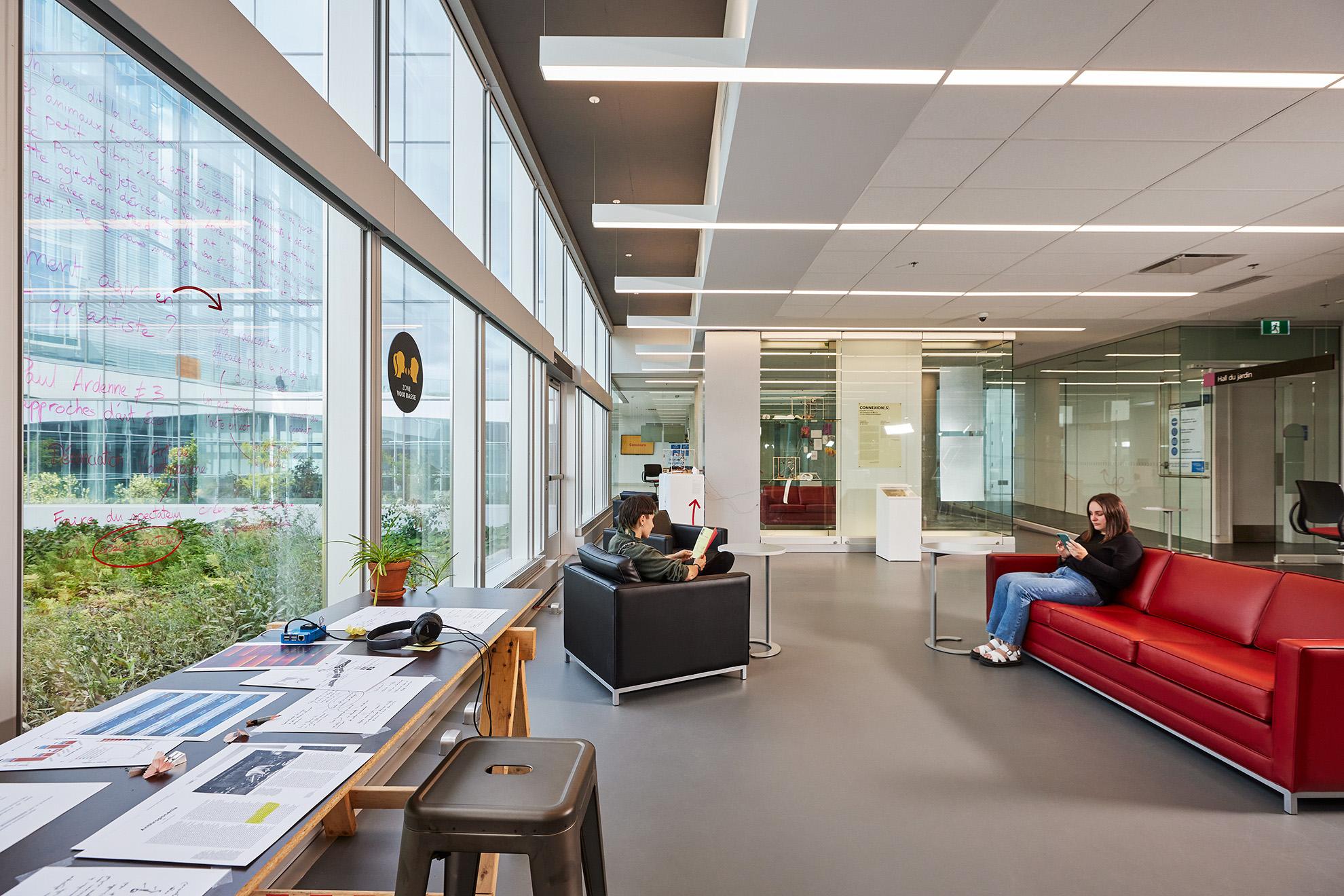
At the UdeM Brossard Campus, students learn in a setting where university expectations become part of daily practice rather than distant ideas.
01 · Academic expectations02 · Independent learning03 · University culture04 · Collaborative learning05 · Intellectual exploration
Learn Like a University StudentThink Like a University StudentSucceed Like a University Student
Pathways to the future
A complete progression from language preparation to professional success.
Students can enter at the stage that reflects their current preparation and progress with clear academic purpose.
01Language Preparation
02Academic Foundation
03University Pathway
04Undergraduate Studies
05Graduate Studies
06Professional Success
Academic preparation for a world of opportunity
Shape Your Future
Build the subject knowledge and university capabilities needed to pursue ambitious study in business, technology, engineering, social sciences, and beyond.
BusinessTechnologyEngineeringSocial Sciences
Building Foundations. Creating Opportunities. Inspiring Success.